


- View
Persian cuisine has gifted the world countless dishes that blend simplicity with sophistication, and Tahchin stands as a shining example of this culinary philosophy. This elegant saffron rice cake has graced Iranian tables for generations, turning humble ingredients into something truly spectacular.
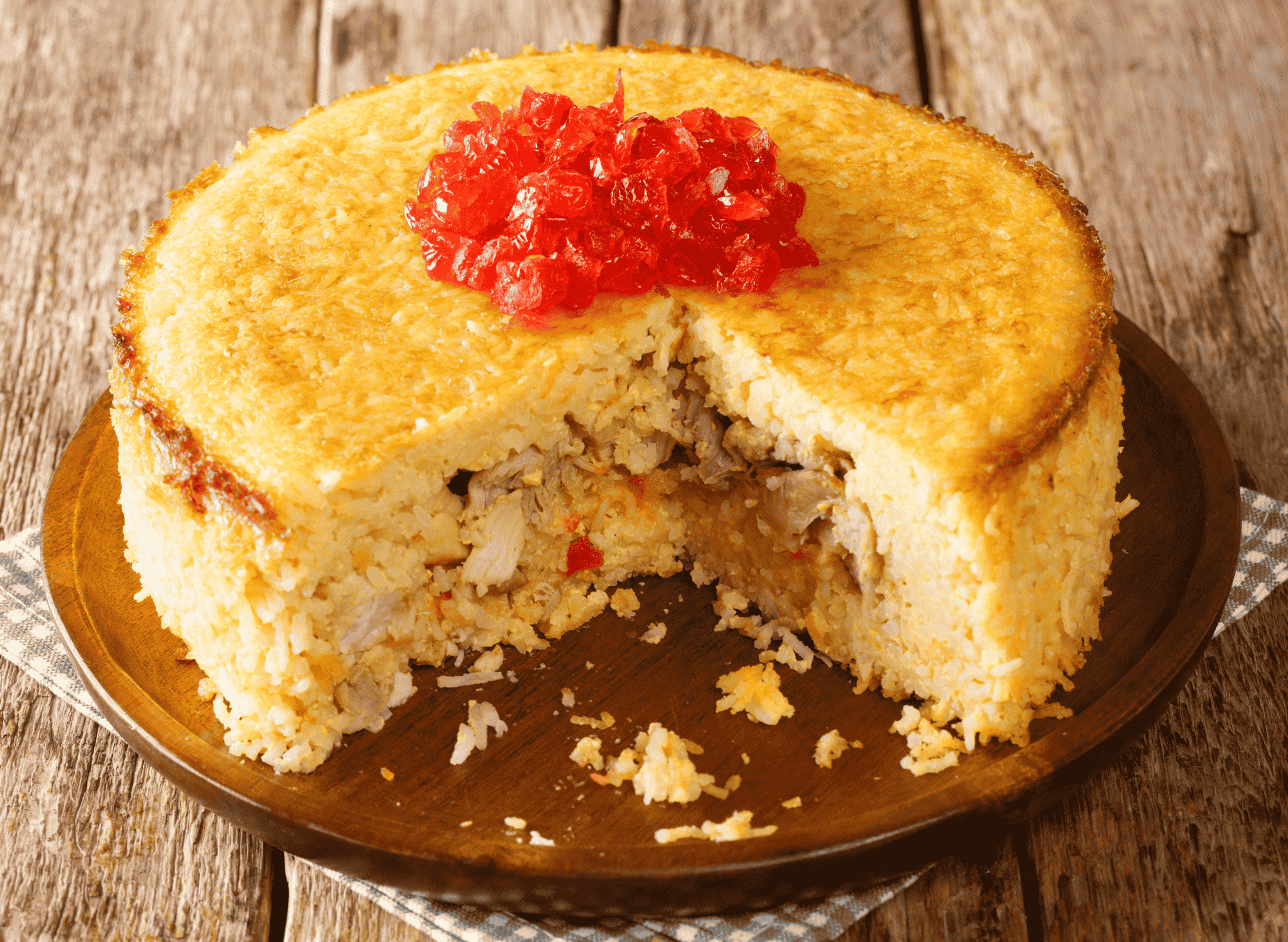
What makes Tahchin so captivating is its contrast: a golden, crispy crust gives way to tender, aromatic rice layered with succulent chicken or lamb. The dish arrives at the table like a present waiting to be unwrapped, its amber exterior hinting at the treasures within.
For those unfamiliar with Persian cooking, Tahchin offers an ideal introduction. It showcases the Iranian love affair with saffron, rice, and the art of creating tahdig, that coveted crispy bottom layer that Persians consider the best part of any rice dish.
Want to dive deeper into Iranian Cuisine? Don’t miss our post on Traditional Iranian Foods to Try
What Is Tahchin?
Tahchin, pronounced “tah-CHEEN,” takes its name from the Farsi words meaning “arranged at the bottom.” This perfectly describes the cooking technique: layers of saffron infused rice and marinated meat are pressed into a pot or baking dish, then cooked until the bottom transforms into a gorgeous golden crust.
Think of it as a savoury rice cake with serious depth. The dish typically features chicken as its protein, though lamb and even vegetarian versions exist. The rice itself becomes richly coloured from saffron and egg yolk, creating that distinctive yellow orange hue that makes Tahchin instantly recognisable.
Unlike many rice dishes where ingredients are simply mixed together, Tahchin demands careful layering. The bottom layer consists of saffron rice mixed with yoghurt and egg, which creates that prized crispy base. The middle holds the meat, and more rice crowns the top. When flipped onto a serving platter, it reveals its burnished crust in all its glory.
Tahchin belongs to a family of Persian rice dishes called polo, but it distinguishes itself through its unique presentation and that unmistakable crunch. Served at celebrations, family gatherings, and special occasions, it commands attention at any table.
Ingredients and Taste
The ingredient list for Tahchin reads like a love letter to Persian pantry staples. Basmati rice forms the foundation, chosen for its long grains and ability to stay fluffy while absorbing flavours beautifully. Saffron threads, steeped in warm water or rose water, provide both colour and an earthy, honey like fragrance that defines Persian cooking.
Yoghurt plays a crucial role, tenderising the meat during marination and adding tanginess to the rice mixture. Egg yolks bind everything together while contributing to that sought after crispy bottom. Butter or oil ensures proper browning and prevents sticking, though generous amounts are essential for achieving the right texture.
The chicken gets marinated in a blend of yoghurt, saffron, salt, and sometimes onions before being partially cooked. Some recipes add barberries, those tiny tart dried fruits that pop up throughout Persian cuisine, lending bright acidity to cut through the richness. Others incorporate zereshk polo style elements or even dried fruits and nuts for festive versions.
As for taste, Tahchin delivers on multiple fronts. The saffron imparts a subtle floral quality that lingers on the palate. The yoghurt adds a pleasant tanginess that balances the buttery notes. Each bite offers textural variety: the shatteringly crisp bottom layer, the tender rice, and the juicy meat create a symphony of sensations.
The overall flavour profile remains elegant rather than spicy. Persian cuisine typically favours aromatic complexity overheat, and Tahchin embodies this approach perfectly. It tastes comforting yet sophisticated, familiar yet exotic to those encountering it for the first time.
A Taste of History
Iran’s culinary heritage stretches back thousands of years, and rice dishes have held a place of honour since at least the Safavid dynasty in the sixteenth century. During this golden age of Persian culture, royal kitchens elevated rice cookery to an art form, developing elaborate techniques that home cooks still practise today.
Tahchin emerged from this tradition of creating tahdig, the crispy rice bottom that Iranians prize above all else at the dinner table. The word tahdig literally translates to “bottom of the pot,” and achieving a perfect one remains a point of pride for Persian cooks. Tahchin takes this concept further, building an entire dish around the pursuit of that golden crust.
Saffron, the defining ingredient, has been cultivated in Iran for over three thousand years. The country remains the world’s largest producer of this precious spice, and its use in cooking reflects both cultural identity and historical wealth. In earlier centuries, saffron dishes like Tahchin would appear primarily at celebrations and on the tables of nobility.
Today, Tahchin holds a special place in Iranian home cooking and restaurant culture. Families often serve it during Nowruz, the Persian New Year celebration, and at weddings and other joyous occasions. The dish has also found admirers far beyond Iran’s borders, appearing in Persian restaurants worldwide and gaining appreciation among food enthusiasts eager to explore global cuisines.
How to Make Tahchin Saffron Rice Cake
Tahchin is a cherished Iranian rice dish known for its golden crust and fragrant saffron aroma. The process rewards patience, from marinating the chicken to layering the rice mixture for a crisp yet tender finish. Expect a dish that balances richness with gentle spice. See the recipe card at the bottom for printable directions
Ingredients
- 2 cups basmati rice
- 350 g chicken breast or thigh
- 1 medium onion, sliced
- 1 cup plain yoghurt
- 2 large eggs
- 1 tsp saffron threads, bloomed in hot water
- 3 tbsp vegetable oil or melted butter
- 1 tsp turmeric
- ½ tsp cinnamon
- Salt, to taste
- Black pepper, to taste
- 3 tbsp barberries washed and drained optional
- 1 tbsp sugar optional for barberries
- Additional oil or butter for greasing
Cooking Instructions
Step 1: Preheat and prepare the base mixture
Preheat your oven to 180°C. Rinse the basmati rice several times until the water runs clear. In a large bowl, combine the plain yoghurt, eggs, saffron liquid, and a pinch of salt. Stir gently to create a smooth, vibrant mixture, ensuring the saffron is evenly dispersed before moving on to the next step.
Step 2: Cook and season the chicken
Place the chicken pieces in a pan with the sliced onion, turmeric, cinnamon, salt, and pepper. Add enough water to cover, then simmer until tender. Remove the chicken, shred it into even strips, and taste for seasoning, adjusting as needed. Allow it to cool slightly before mixing further.
Step 3: Parboil the rice
Bring a large pot of salted water to a boil. Add the rinsed rice and cook until the grains are soft on the outside but firm within. Drain thoroughly and rinse briefly with warm water to stop the cooking. This ensures long, separate grains once baked.
Step 4: Combine rice with saffron mixture
Fold two thirds of the parboiled rice into the saffron yoghurt mixture. Do this gradually to coat every grain without crushing the rice. Keep the remaining rice plain for layering in later steps.
Step 5: Layer the Tahchin base
Grease an ovenproof dish generously with butter or oil. Spoon half of the saffron rice mixture into the base and press it down firmly with the back of a spoon. Compacting this layer helps form the signature crisp crust known as tahdig.
Step 6: Add the chicken layer
Spread the shredded chicken evenly over the compact saffron rice. If using barberries, sauté them lightly with a little sugar and oil before scattering them over the chicken. This adds a tart lift to the dish.
Step 7: Top with remaining rice
Cover the chicken with the rest of the saffron rice mixture, followed by the remaining plain rice. Smooth the surface and press gently. A tight structure ensures even browning and a neat shape once unmoulded.
Step 8: Bake to achieve the crust
Cover the dish with foil and bake for 45 minutes. Remove the foil for the final 15 minutes to deepen the colour and crispness. Listen for a gentle sizzle at the edges which signals that the crust is forming properly.
Step 9: Rest before turning out
Let the Tahchin rest for 10 minutes. This allows steam to settle and helps the rice cake lift cleanly from the dish. Loosen edges with a thin spatula before unmoulding onto a serving plate.
Step 10: Serve and garnish
Slice the Tahchin carefully and serve with extra barberries, yoghurt, or a simple herb salad. Highlight the golden crust when plating, as its colour and texture are the pride of a well-made Tahchin.
Variations and Substitutions
- Meat alternative: Replace chicken with roasted aubergine for a vegetarian version.
- Rice substitute: Any long grain aromatic rice works if basmati is unavailable.
- Barberries replacement: Dried cranberries lightly soaked can be used when barberries are difficult to source.
- Yoghurt alternative: Greek yoghurt can be used but should be thinned slightly with warm water.
Cooking Tips for Perfect Tahchin
- Bloom saffron in hot water rather than grinding it dry to release full colour and fragrance.
- Press each rice layer firmly to create a crisp and even tahdig crust.
- Avoid overboiling the rice or it will become mushy when baked.
- Allow resting time before unmoulding to prevent the cake from breaking.
How to Store and Reheat
Cooling and First Storage
Once baked, Tahchin benefits from a short rest at room temperature so the structure settles and slices cleanly. If you have leftovers, allow the remaining slices to cool until they are just warm. Wrap the dish tightly or place slices in a covered container to prevent the rice from drying out.
Storing in the Fridge
In the fridge, well wrapped Tahchin keeps its quality for about two to three days. Try to keep slices in a single layer so the crust does not turn soggy where pieces press together. If you have included chicken, prompt refrigeration after cooling is important for food safety and for keeping the flavour fresh.
Freezing for Later
Tahchin also freezes better than you might expect. Wrap individual slices in baking paper, then place them in a freezer safe container. This helps protect the crust from ice crystals and makes it easy to defrost only what you need. Use within a month for best texture and to keep the saffron aroma lively.
Reheating in the Oven
For reheating, the oven is your friend if you want to revive that prized crust. Set the oven to a moderate heat, place the slices on a tray and cover lightly with foil for the first part of heating so the centre warms through. Remove the foil at the end to let the surface become crisp again.
Reheating on the Hob
If you prefer using the hob, a heavy frying pan with a lid works well. Brush the base with a little oil or butter, set the slice in gently and cover. Use low heat so the interior warms without scorching. Remove the lid for a few minutes at the end to restore some of that lovely crunchy base.

Tahchin (Saffron Rice Cake)
Ingredients
- 2 cups basmati rice
- 350 g chicken breast or thigh
- 1 medium onion sliced
- 1 cup plain yoghurt
- 2 large eggs
- 1 tsp saffron threads bloomed in hot water
- 3 tbsp vegetable oil or melted butter
- 1 tsp turmeric
- ½ tsp cinnamon
- Salt to taste
- Black pepper to taste
- 3 tbsp barberries washed and drained optional
- 1 tbsp sugar optional for barberries
- Additional oil or butter for greasing
Instructions
- Preheat your oven to 180°C. Rinse the basmati rice several times until the water runs clear. In a large bowl, combine the plain yoghurt, eggs, saffron liquid, and a pinch of salt. Stir gently to create a smooth, vibrant mixture, ensuring the saffron is evenly dispersed before moving on to the next step.
- Place the chicken pieces in a pan with the sliced onion, turmeric, cinnamon, salt, and pepper. Add enough water to cover, then simmer until tender. Remove the chicken, shred it into even strips, and taste for seasoning, adjusting as needed. Allow it to cool slightly before mixing further.
- Bring a large pot of salted water to a boil. Add the rinsed rice and cook until the grains are soft on the outside but firm within. Drain thoroughly and rinse briefly with warm water to stop the cooking. This ensures long, separate grains once baked.
- Fold two thirds of the parboiled rice into the saffron yoghurt mixture. Do this gradually to coat every grain without crushing the rice. Keep the remaining rice plain for layering in later steps.
- Grease an ovenproof dish generously with butter or oil. Spoon half of the saffron rice mixture into the base and press it down firmly with the back of a spoon. Compacting this layer helps form the signature crisp crust known as tahdig.
- Spread the shredded chicken evenly over the compact saffron rice. If using barberries, sauté them lightly with a little sugar and oil before scattering them over the chicken. This adds a tart lift to the dish.
- Cover the chicken with the rest of the saffron rice mixture, followed by the remaining plain rice. Smooth the surface and press gently. A tight structure ensures even browning and a neat shape once unmoulded.
- Cover the dish with foil and bake for 45 minutes. Remove the foil for the final 15 minutes to deepen the colour and crispness. Listen for a gentle sizzle at the edges which signals that the crust is forming properly.
- Let the Tahchin rest for 10 minutes. This allows steam to settle and helps the rice cake lift cleanly from the dish. Loosen edges with a thin spatula before unmoulding onto a serving plate.
- Slice the Tahchin carefully and serve with extra barberries, yoghurt, or a simple herb salad. Highlight the golden crust when plating, as its colour and texture are the pride of a well-made Tahchin.
Leave a Review